
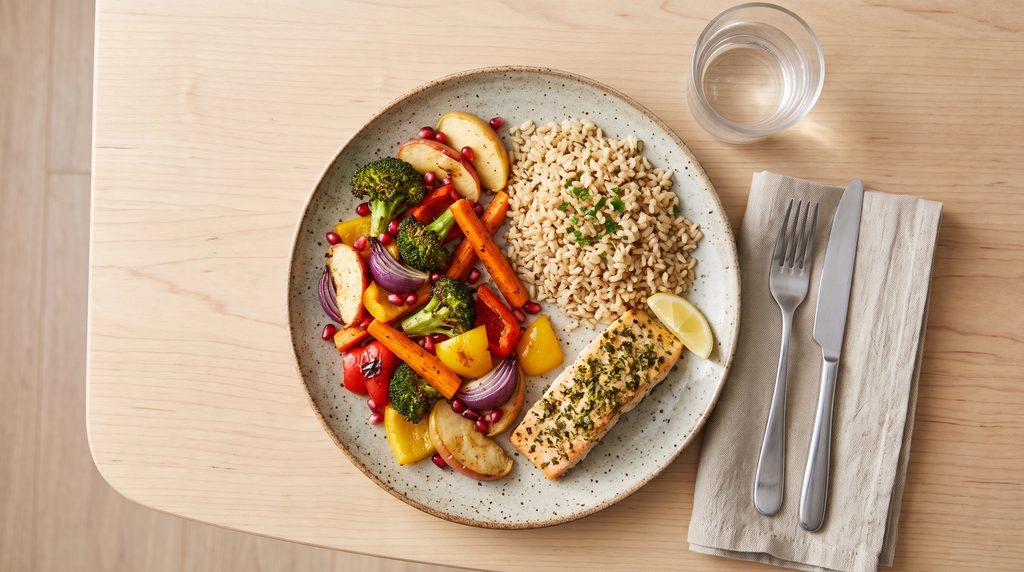
Picture this: it’s 6 p.m., you’re tired, and your fridge holds half a cucumber, some leftover rice, and a jar of pickles. Dinner turns into cereal. Again.
Most of us know vegetables are good for us. What we struggle with is putting a meal together when life gets busy. That’s where a simple plan helps.
This guide shows you how to plan balanced meals without counting calories or following a strict diet. You’ll learn an easy plate method, a five-step planning routine, and a sample day of meals you can adjust to your own tastes.
What Are Balanced Meals?
Balanced meals include a mix of food groups, so your body gets a range of nutrients. That means carbohydrates for energy, protein for building and repairing tissue, healthy fats, and vitamins, minerals, and fiber, mostly from plants.
The World Health Organization describes a healthy diet as one with plenty of fruits, vegetables, legumes, nuts, and whole grains, while limiting free sugars, salt, and unhealthy fats.
You don’t need a perfect plate every time. Think of a balanced diet as a pattern over days and weeks, not a test you pass or fail at each meal.
Build Your Plate With the Plate Method
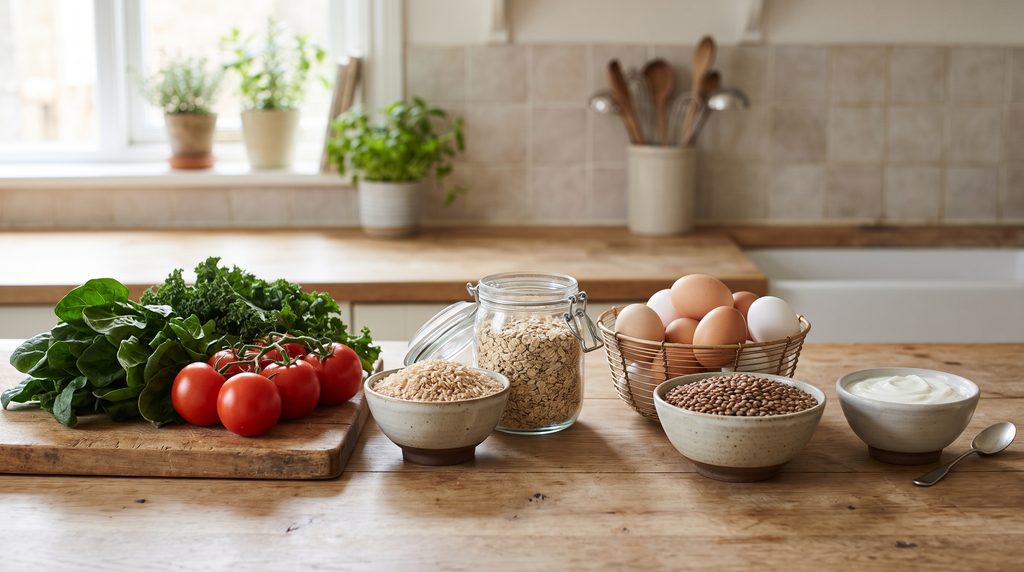
Counting grams and calories can be confusing when you’re starting out. A picture of a plate is much easier.
MyPlate, the USDA’s guide, shows fruits and vegetables filling half the plate, grains and protein sharing the other half, and dairy on the side. msu
Half Your Plate: Fruits and Vegetables
Go for color and variety, like leafy greens, carrots, tomatoes, berries, and oranges. Fresh, frozen, and canned all count. Extension experts at NC State say the health difference between them is minimal, so don’t let a lack of fresh produce stop you. For canned items, check the label for added salt or sugar. ncsu
The WHO suggests eating at least 400 grams of fruits and vegetables a day, which is about five portions. Treat that as a goal to grow toward, not a test to pass on day one.
One Quarter: Whole Grains
Think brown rice, oats, quinoa, or whole-wheat bread. MyPlate recommends making at least half of your grains whole grains. They usually have more fiber than refined grains like white bread. msu
One Quarter: Protein
Beans, lentils, eggs, fish, poultry, tofu, and nuts all count. Mix them up across the week instead of eating the same thing every day. Beans and lentils are also easy on the budget.
On the Side: Dairy or an Alternative
Milk, yogurt, cheese, or fortified soy drinks fit here. If you avoid dairy, a registered dietitian can help you cover your calcium needs another way.
Treat this as a starting point, not a strict rule. Harvard’s Healthy Eating Plate is similar, and it also stresses plant oils and water as your main drink. Your culture, budget, and health needs matter too.
How to Plan Balanced Meals in 5 Steps
Meal planning doesn’t need a color-coded spreadsheet. Try this routine once a week, ideally before you shop.
Step 1: Look at Your Week
Check your calendar first. Late meeting on Tuesday? Plan something quick. Free Sunday afternoon? That’s your prep time.
Step 2: Pick a Simple Formula
For each dinner, choose one protein, one whole grain or starchy food, and one or two vegetables. For example, chicken, brown rice, and broccoli. Or lentils, whole-wheat pasta, and tomato sauce with spinach. Once you have a few formulas, you can rotate them.
Step 3: Shop by Plate Section
Write your grocery list in four groups: fruits and vegetables, grains, protein, and dairy. This keeps you from filling the cart with only snacks and drinks.
Step 4: Prep Building Blocks
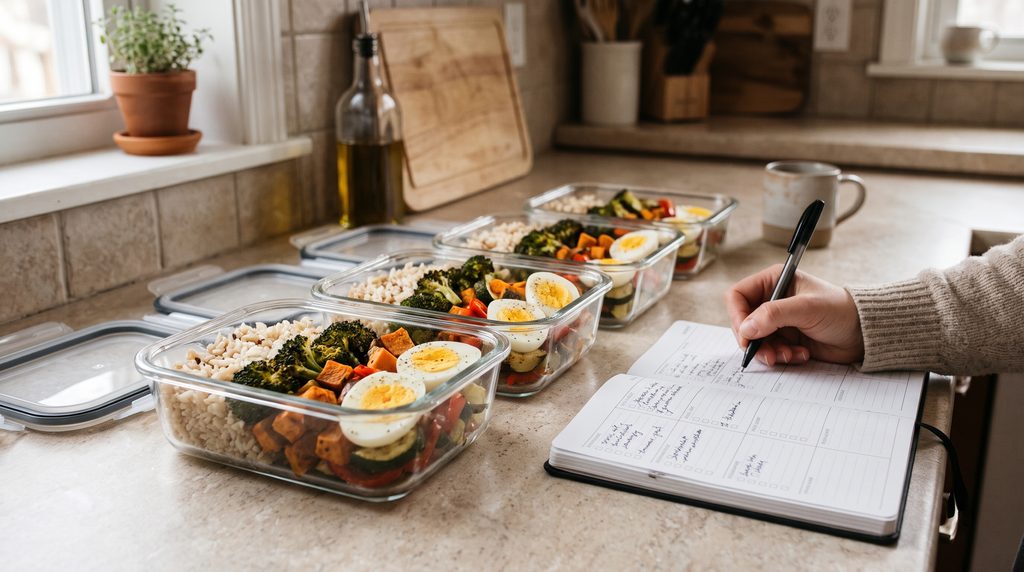
Full meal prep can feel overwhelming, so skip it if you like. Just cook a pot of rice, roast a tray of vegetables, or boil half a dozen eggs. These pieces mix and match all week.
Step 5: Leave Some Wiggle Room
Plan five dinners, not seven. Leave space for leftovers, takeout, or a night out with friends. Flexibility is what makes a plan last.
A Sample Day of Healthy Meal Ideas
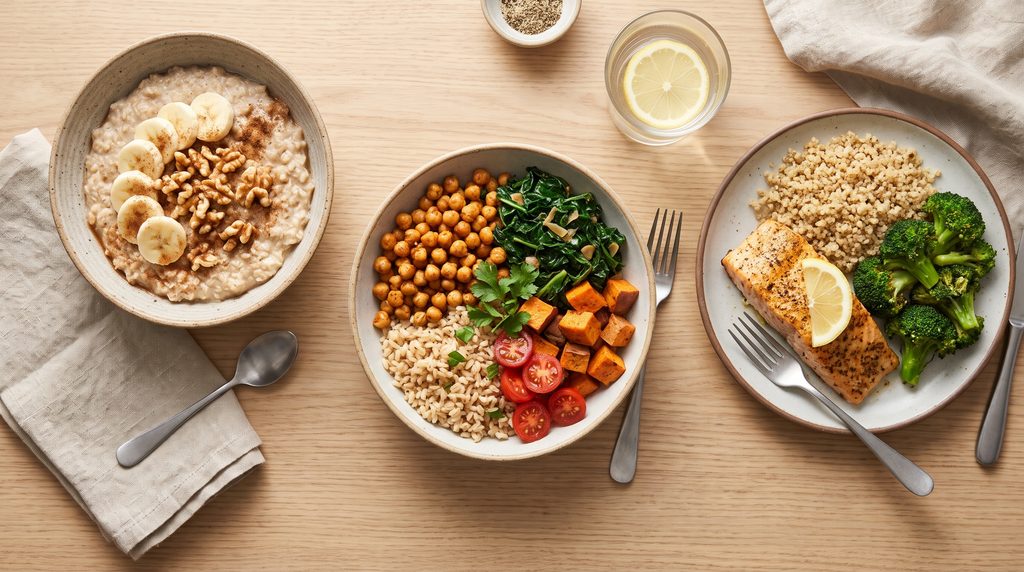
Here’s one example. Swap in foods you enjoy and adjust the amounts to your appetite.
- Breakfast: Oatmeal made with milk, topped with banana slices and walnuts.
- Lunch: A brown rice bowl with chickpeas, cucumber, tomato, and a squeeze of lemon.
- Snack: Plain yogurt with berries, or carrot sticks with hummus.
- Dinner: Baked fish or tofu with quinoa and steamed broccoli and carrots.
Notice that each meal has a plant-based base, a protein, and some fiber. That’s the pattern, not the exact foods.
Save Time and Money Without Skipping Nutrition
Balanced meals don’t have to be expensive or slow.
- Frozen vegetables and fruit last longer and are ready in minutes.
- Canned beans, lentils, and tuna are shelf-stable protein. Check labels for added salt.
- Eggs, oats, and peanut butter are simple, budget-friendly staples.
- Batch cooking helps too. Make a double batch of soup or chili and freeze half.
- Seasonal produce is often fresher and a better value.
A Hypothetical Example
Imagine Daniel, a college student who lives on instant noodles and takeout. (This is a made-up example, not a real case.) He doesn’t overhaul his diet. He adds a frozen vegetable mix and a boiled egg to his noodles. Later, he swaps one takeout dinner a week for a rice-and-bean bowl.
After a few weeks, he’s cooking two dinners a week with the plate method. Nothing dramatic, but each meal is a little more balanced than before.
Mistakes to Avoid
- Chasing perfection. One unbalanced meal won’t ruin your week.
- Forgetting drinks. Sugary drinks add up quickly. The WHO recommends keeping free sugars below 10% of daily energy, so water, unsweetened tea, or milk are easy swaps.
- Trusting front-of-package claims. Words like “natural” or “light” don’t make a food balanced. Check the Nutrition Facts label for added sugar and sodium. The WHO suggests keeping salt under 5 grams a day.
- Planning too much too soon. Start with two or three planned meals a week.
Helpful Tools (Affiliate Disclosure)
You don’t need special gear to eat well. Still, a few basics can help, like reusable meal containers, a good chef’s knife, or a simple weekly meal-planning notebook.
Disclosure: If we link to products on Zavexia.com, we may earn a small commission at no extra cost to you. We only mention items that are genuinely relevant, and none of them are required.
When to Ask a Professional
If you have a medical condition, a food allergy, or take regular medication, or if you’re pregnant or have a history of disordered eating, talk to your doctor or a registered dietitian before changing how you eat. This article is for education only and isn’t personal medical advice.
C. Practical Table: Balanced Plate Cheat Sheet
| Plate Section | What Counts | Easy Examples |
|---|---|---|
| Half: Fruits and vegetables | Fresh, frozen, or canned (check labels) | Spinach, carrots, berries, tomatoes |
| One quarter: Whole grains | Foods made from whole grains | Brown rice, oats, quinoa, whole-wheat bread |
| One quarter: Protein | Animal and plant sources | Eggs, fish, beans, lentils, tofu |
| On the side: Dairy or alternative | Milk, yogurt, cheese, fortified soy | Plain yogurt, a glass of milk |
D. FAQ
What counts as balanced meals?
A balanced meal includes variety from the main food groups: fruits and vegetables, whole grains, protein foods, and dairy or an alternative. Portions should fit your appetite and needs.
Do I need to count calories to eat balanced meals?
Not necessarily. Many beginners do well with the plate method and simple habits. If you have a specific health goal or condition, a registered dietitian can give personalized guidance.
Can I eat balanced meals as a vegetarian or vegan?
Yes. Beans, lentils, tofu, nuts, and whole grains can all fill the protein section. A registered dietitian can help make sure you’re getting nutrients like vitamin B12.
Does every single meal have to be perfectly balanced?
No. Look at your whole day or week instead. If one meal is light on vegetables, add more at the next one.
How long does weekly meal planning take?
Start by giving yourself 10 to 15 minutes. It usually gets faster as you build a list of go-to meals.
Are frozen vegetables as healthy as fresh ones?
NC State Extension says the difference in health benefits is minimal. Just check the label for added sauces, salt, or sugar. ncsu
E. Conclusion
Planning balanced meals isn’t about being perfect. It’s about having a simple picture in your head: half vegetables and fruit, a quarter whole grains, a quarter protein, and dairy or an alternative on the side.
Start small. Plan two or three dinners this week, cook one building block ahead, and write your grocery list by plate section. Some weeks will go smoothly and others won’t, and that’s okay. Over time, these small steps add up to a healthy lifestyle that feels natural.
If you have health concerns or special dietary needs, check in with a doctor or registered dietitian. Otherwise, pick one dinner tonight and try the plate method.