
You sit down with a bag of chips, planning to eat “just a few.” Ten minutes later, your hand hits the bottom of the bag. Nobody plans that. It just happens.
The good news is that you don’t need an app, a scale, or a math degree to fix it. A few small changes to how you serve and eat your food can make a big difference.
These portion control tips are simple, flexible, and made for beginners. There are no strict rules here, just ideas you can try at your next meal.
Portion Size vs. Serving Size: What’s the Difference?
These two terms sound the same, but they aren’t.
A serving size is a standard amount, like the one listed on a food label. A portion is the amount you actually put on your plate. A portion can be bigger or smaller than a serving. For example, a one-cup helping of whole-wheat pasta is one portion, but it equals two servings, since a serving is half a cup. hprc-online
That’s why it helps to glance at the Nutrition Facts label. It tells you the serving size, and everything else on the label is based on that amount.
Why Portion Sizes Matter
Here’s the interesting part: it isn’t only about willpower. Our surroundings push us, too.
A large Cochrane review of randomized trials found that people consistently ate and drank more when they were given larger portions, packages, or tableware, such as bigger plates and bowls. In other words, a bigger helping often leads to eating more, even when we aren’t hungrier. nihr
There’s a limit to this research, though. The reviewers noted it’s still unclear whether short-term changes in how much people eat lead to lasting reductions over time. So think of these tips as helpful tools, not magic fixes. cochrane
One more note: the goal isn’t to eat as little as possible. It’s to eat in a way that feels satisfying and fits your needs.
8 Portion Control Tips That Don’t Need Math
1. Use Your Hand as a Guide
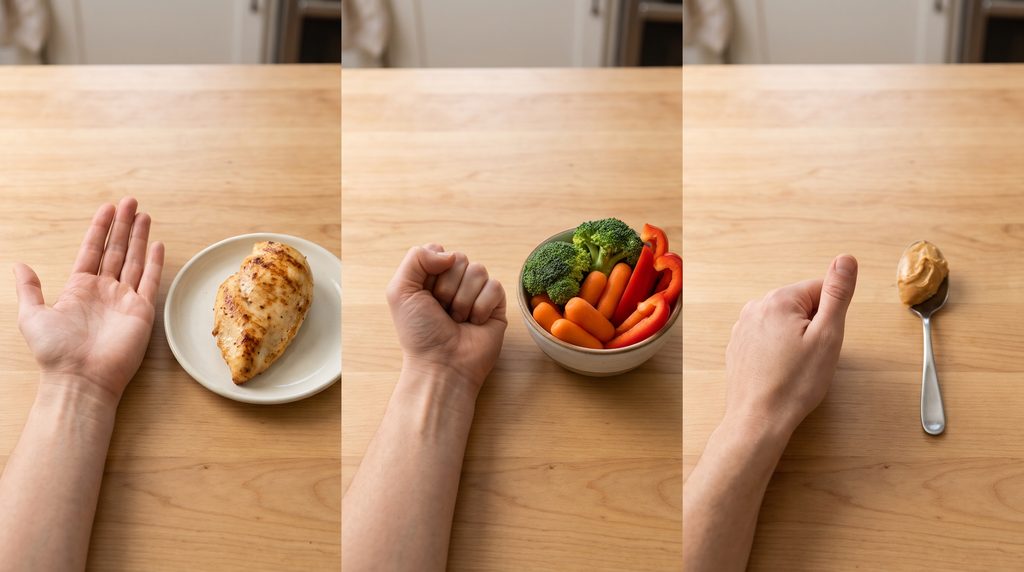
Your hand is a measuring tool you always carry. A fist is about 1 cup of milk or raw vegetables, a thumb is about 2 tablespoons of peanut butter or salad dressing, and a cupped palm is about half a cup of cooked fruit, vegetables, beans, or starch. An open palm is about 3 ounces of cooked meat, fish, or poultry. hprc-online
Hands vary in size, but they tend to match body size, so the guide scales to you. See the table below for a quick cheat sheet.
2. Follow the Plate Method
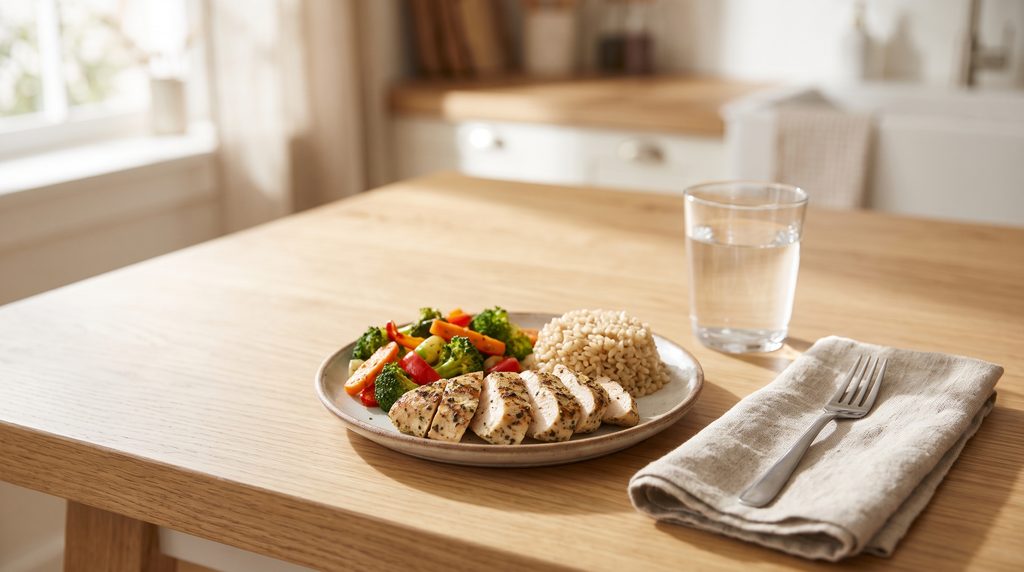
Fill half your plate with fruits and vegetables, a quarter with whole grains, and a quarter with protein. MyPlate uses this layout, and MSU Extension notes it’s based on a 9-inch plate. A giant dinner plate can make this harder, so try a smaller one.
3. Serve Food on a Plate, Not From the Package
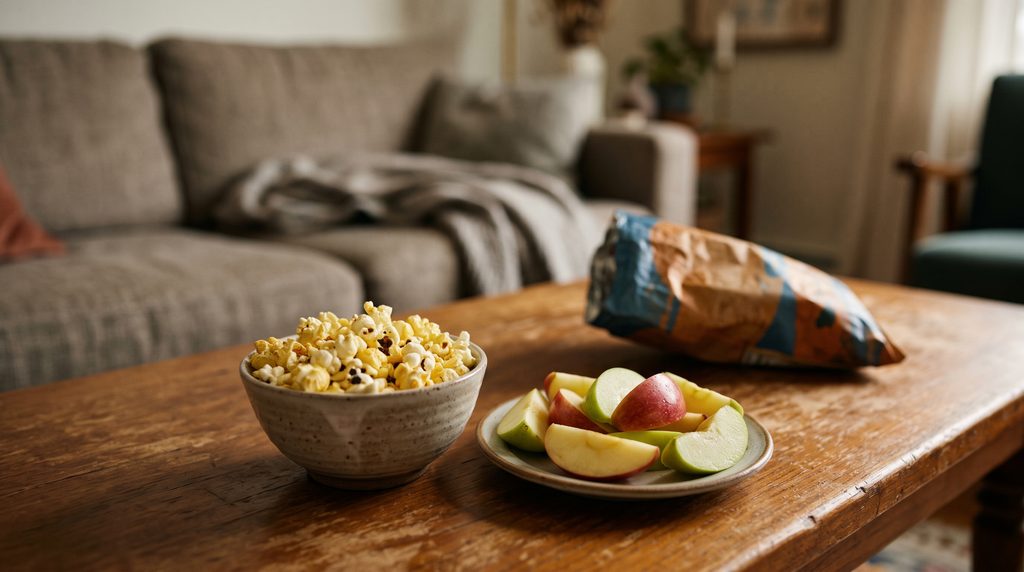
Eating from a bag or carton makes it hard to see how much you’ve had. Pour a portion into a bowl, then put the package away. The Cochrane review above found package size matters too, so this small step is worth a try.
4. Try Smaller Plates and Bowls
Using smaller tableware may help you serve yourself a bit less without feeling deprived. If a 9-inch plate looks full, your brain gets a “this is enough” message. Give it a week and see how it feels.
5. Slow Down and Pause Halfway
A Mayo Clinic community blog notes that it can take around 20 minutes for your brain to get the “I’m full” signal. Put your fork down between bites. Halfway through your meal, stop and ask, “Am I still hungry?”
6. Serve in the Kitchen, Not at the Table
When pots and dishes sit in front of you, seconds are just an arm’s reach away. Plate your food at the stove, then bring only your plate to the table. If you still want more after a few minutes, you can go back.
7. Plan Ahead for Restaurants
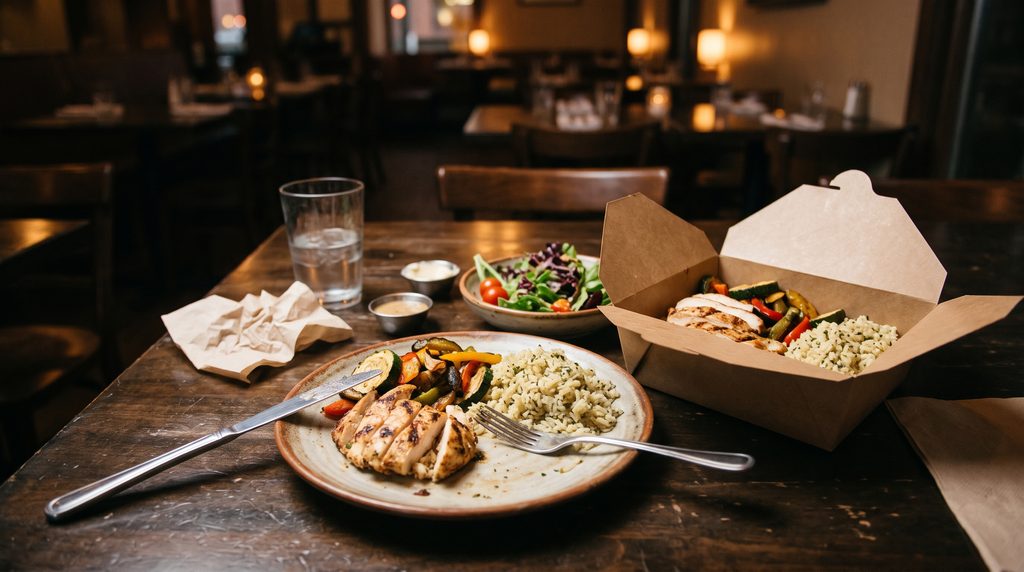
Restaurant portions can be large. Share an entrée with a friend, ask for a to-go box when your food arrives, or order a side salad or soup as part of your meal. Putting half away early removes the temptation.
8. Check In With Your Hunger
Before you eat, ask yourself: “Am I hungry, bored, or stressed?” Midway, ask, “How hungry am I now?” This is the heart of mindful eating. You don’t have to be perfect, just curious.
A Hypothetical Example
Imagine Priya, who snacks on chips straight from the bag during movie night. (This is a made-up example, not a real case.)
She doesn’t give up chips. She pours a handful into a bowl, adds apple slices, and puts the bag back in the cupboard. She still enjoys her snack, but she stops mid-movie to notice how she feels. Small tweaks like these are easier to keep than a strict food plan.
Common Mistakes to Avoid
- Skipping meals to “save up.” This can leave you very hungry and more likely to overeat later.
- Going too small, too fast. If a portion leaves you hungry an hour later, add more vegetables or protein.
- Treating healthy foods as unlimited. Nuts, avocado, and granola are nutritious, but a bigger portion means more calories.
- Forgetting drinks. Juice, soda, and sweetened coffee drinks count too.
- Being hard on yourself. One big meal isn’t a failure. Just aim for balance at the next one.
Helpful Tools (Affiliate Disclosure)
You don’t need gadgets to manage portion sizes. Still, a few basics can help, like measuring cups and spoons (to learn what a portion looks like), smaller plates and bowls, or reusable snack containers.
Disclosure: If we link to products on Zavexia.com, we may earn a small commission at no extra cost to you. We only mention items that are genuinely relevant, and none of them are required.
When to Talk to a Professional
If you have diabetes, kidney disease, a food allergy, or another medical condition, take regular medication, or are pregnant, ask your doctor or a registered dietitian before changing how you eat. If thinking about portions makes you anxious or you have a history of disordered eating, please talk to a healthcare professional first. This article is for education only and isn’t personal medical advice.
C. Practical Table: Hand Portion Guide
Hands vary in size, so treat these as rough starting points. You can compare your own fist and palm to a measuring cup once to see how they match.
| Hand Measure | Approximate Portion | Example Foods |
|---|---|---|
| Fist | About 1 cup | Milk, raw vegetables |
| Cupped palm | About ½ cup | Cooked vegetables, beans, rice, pasta, fruit |
| Open palm | About 3 ounces | Cooked meat, fish, poultry |
| Thumb | About 2 tablespoons | Peanut butter, salad dressing |
D. FAQ
What are the easiest portion control tips for beginners?
Start with two: use a smaller plate and serve food on a plate instead of eating from the package. Then add the hand guide when you’re ready.
Do I have to count calories to manage portion sizes?
No. Hand guides, the plate method, and eating slowly can help you manage portions without counting. If you have a specific health goal, a registered dietitian can offer personalized advice.
Is a portion the same as a serving?
Not always. A serving is a standard amount, often shown on a label. A portion is the amount you actually eat, which can be bigger or smaller.
Do smaller plates really work?
Research suggests people eat more from larger tableware, so smaller plates may help some people. They aren’t a guarantee, and results vary from person to person.
How can I control portions at restaurants?
Share an entrée, ask for a to-go box early, order a side salad, or choose a smaller size when available. Eating slowly also helps you notice when you’re full.
Should I stop eating when I feel full, even if food is left?
It’s reasonable to pause and check in with your hunger. You can save leftovers for later. If you often feel unsure about fullness cues, a dietitian can help.
E. Conclusion
Managing portion sizes doesn’t require special tools or strict rules. A few small habits go a long way: use your hand as a guide, serve food on a plate, slow down, and check in with your hunger.
Pick one or two portion control tips to try this week, like pouring snacks into a bowl or putting half your restaurant meal in a box right away. Some meals will go smoothly and others won’t, and that’s okay.
If you have health concerns or special dietary needs, check in with a doctor or registered dietitian. Otherwise, start with your next snack and notice how it feels.