
6.30 pm, tired, hungry, looking into the open fridge. There’s nothing like dinner, so you get takeout again.
It’s what a healthy meal plan for beginners is supposed to remedy. A meal plan is only an approximate estimate of what you’ll be eating for the week. Removes the guesswork of food choices, so you can make food decisions without stress.
There’s no need for elaborate recipes, hard rules, or fancy ingredients. Here are the elements of a meal plan for beginners, a sample menu, grocery list, and answers to common questions.
Why Meal Planning Helps (Even If You’re Not Trying to Lose Weight)
Planning ahead does more than save time. It can help you:
- Don’t make spur-of-the-moment food decisions.
- Go to the supermarket with a shopping list to reduce waste.
- Try to pack in more vegetables, fruit, whole grains, and protein during the day.
- Don’t make hasty decisions when tired or pressed for time
A healthy diet can help prevent diet-related chronic diseases such as diabetes, heart disease, stroke and cancer, the World Health Organisation (WHO) says. Yet, food is just one aspect of health. Sleep, movement, stress and medical care are also important.
A meal plan isn’t the answer. An easy, healthy eating plan is better than a “perfect” eating plan that you do for just three days and then give up on.
How to Build Your Meal Plan, Step by Step
Step 1: Know Your Starting Point and Your “Why”
Before making any plans, consider what you desire. More energy? A steadier routine? Less Takeout Money? A clear purpose is what will help you in the absence of motivation.
Needs vary from individual to individual. What constitutes a good diet will vary depending on age, activity, and health status. Please consult your doctor or registered dietitian before going on this diet if you have diabetes, kidney disease, a history of food allergies, are pregnant, or are on regular medication. They have the ability to customize information for you.
Step 2: Use the Plate Method
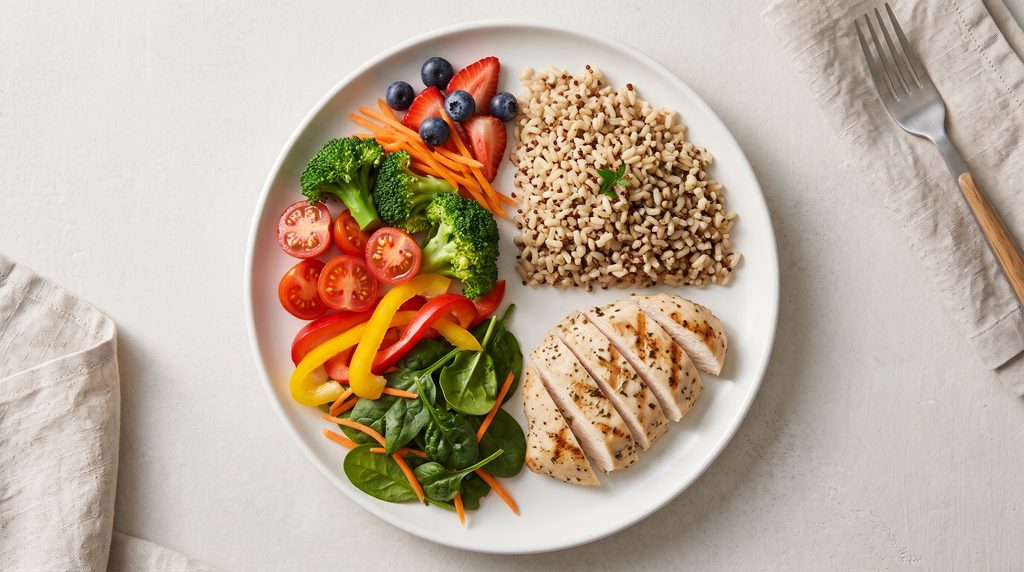
Don’t count the calories to get going. The easiest way to measure portion sizes is by following a simple visual guide.
MyPlate is a USDA program that suggests consuming half your plate of fruits and vegetables. The rest is for grains and protein, and a side dish of dairy or fortified foods is optional. It recommends a minimum of 50% whole grains in your grains.
Harvard’s Healthy Eating Plate is not too far behind, and indicates about one-half of vegetables and fruits, one-quarter of whole grains, and one-quarter of healthy proteins.
Try this at your next meal. Visualise your plate in slices before serving. No app needed and only takes 10 seconds.
Step 3: Pick Simple Building Blocks
t’s easier to maintain a balanced diet when you look at it by categories rather than recipes. Select a few favourites from each group:
- Carbohydrates: whole grain crackers, pita bread, breads, pasta, whole grains, potatoes, oranges, and bananas
- Legumes: kidney beans, chickpeas, black-eyed peas, lentils, kidney beans, hummus, falafel, and green peas
- Vegetables: broccoli, green peas, asparagus, carrots, peppers, beets, celery, spinach
- Veggie: celery or carrots
- Fruits: apples and bananas, berries, peaches and plums
Frozen and canned foods also work as well. The frozen veggies are typically less costly, more durable, and won’t need chopping. When purchasing canned foods, look for additional salt or sugar.
Step 4: Start Small, Not With 21 Meals
Many novices attempt to plan each and every meal for the entire week and simply get exhausted. Start smaller instead:
- Plan 3-4 meals for dinner each week
- Choose one or two simple meals to eat for breakfast that you can repeat
- Prepare simple lunches – like leftovers, or a bowl of food.
Might be ok to eat the same foods again. This is one of the easiest and budget-friendly ways of sticking to a weekly meal plan.
Step 5: Write a Smart Grocery List
The plan becomes reality when it is put into action through your grocery list. Check all inventory, and only update when necessary. Keep items in groups (produce, dairy, pantry, frozen) – don’t walk the aisles.
A few habits help:
- Shop after eating, as eating makes people buy more.
- Follow the list, but allow for one fresh fruit or veg.
- Look at unit prices, not package prices
Step 6: Try Light Meal Prep
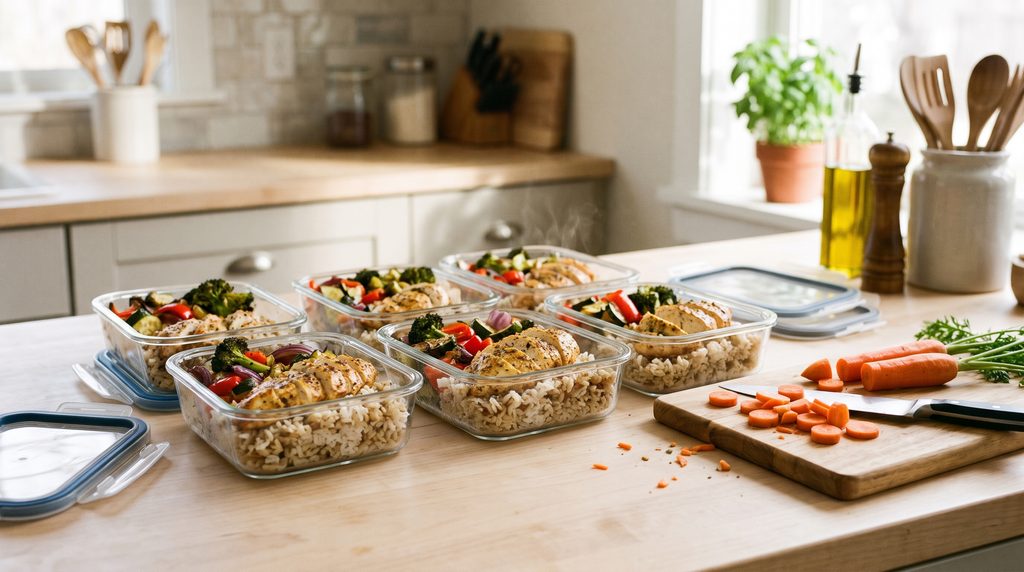
Cooking healthy meals on a Sunday doesn’t need to take hours in the kitchen. Choose 1-2 small tasks:
- Prepare a large pot of rice, oats, or beans.
- Wash and chop vegetables for the next few days
- Boil a few eggs
- Serve nuts or fruit in snack cups.
Use clean, covered containers to put cooked food in the fridge. The U.S. Food and Drug Administration recommends refrigerating leftovers within two hours (one hour if the outside temperature is above 90°F) and consuming most leftovers within three to four days.
Step 7: Review and Adjust Each Week
At the end of each week, ask three questions during the week. What did I enjoy? What went uneaten? What felt too hard?
Get rid of that which is unsuccessful and retain that which is successful. It is important that your plan evolves as you grow. Imagine a draft that you continue to revise.
C. Sample 5-Day Beginner Meal Plan (Table)
This is an example only. Swap in foods you like, and adjust amounts to fit your needs, appetite, and any guidance from your healthcare provider.
| Day | Breakfast | Lunch | Dinner | Snack |
|---|---|---|---|---|
| Monday | Oatmeal with banana and walnuts | Lentil soup with whole-grain bread | Baked chicken, brown rice, steamed broccoli | Apple slices |
| Tuesday | Scrambled eggs, whole-wheat toast, tomato | Leftover chicken and rice bowl with vegetables | Vegetable stir-fry with tofu | Plain yogurt |
| Wednesday | Plain yogurt with berries and oats | Tuna or chickpea salad sandwich, carrot sticks | Bean and vegetable chili | A small handful of nuts |
| Thursday | Oatmeal with apple and cinnamon | Leftover chili with a side salad | Baked fish, roasted potatoes, green beans | Orange |
| Friday | Whole-grain toast with peanut butter, banana | Veggie wrap with hummus | Whole-wheat pasta with tomato sauce and vegetables | Hummus with cucumber |
Notice how often ingredients repeat. That’s on purpose. It keeps shopping simple and food waste low.
Common Beginner Mistakes to Avoid
- Going too strict. Eliminating entire food groups without medical necessity is difficult to sustain and can have a negative effect.
- Ignoring flavor. If you don’t like the food, you will not adhere to the plan. Adding herbs and spices, lemon, and garlic is no big deal and adds to the taste.
- Skipping drinks. The default is simple water. Empty calories can quickly add up. WHO recommends limiting free sugars to less than 10% of your total energy intake.
- Expecting perfection. It’s okay if you eat one meal that is not on plan. Simply go back to your meal plan the following meal.
A Quick Note on Tools and Affiliate Links
No special products required to get started. A little notebook, a simple container to hold food, and a grocery list will suffice. When you eventually decide to adopt tools such as meal-prep containers, a kitchen scale, or a planning app, go with those that work for you and the budget.
Disclosure: Zavexia.com may contain affiliate links in this article – if this is the case, we might make a small commission if you follow these links to make a purchase, at no additional cost to you. We only talk about products that are relevant, and advice is independent. (If you don’t put any affiliate links, remove this note.)
D. Frequently Asked Questions
- How many meals should a beginner make for the week? It begins with 3 or 4 dinners and one or two dinners that can be repeated for breakfast. Increase as planning becomes easy.
2. Is a calorie count necessary to maintain a healthy eating plan? Not necessarily. For many novices, the plate method works and so does portion awareness. Your doctor or dietitian will be able to advise you whether it is a good idea to keep track of calories.
3. What are some healthy eating tips for low incomes? Try frozen vegetables, canned beans (washed), oats, eggs and seasonal fruits and vegetables. Use the foods that are already in the house to make meals, and serve the same foods at more than one meal.
4. Do you need to prepare multiple meals? No, even the smallest things, such as washing the vegetables or cooking a pot of rice in advance, can make weeknights easier.
5. Can a meal plan help me lose weight?
It may support weight goals by making food choices more consistent, but results vary by person, and no plan guarantees weight loss. If weight is your main goal, talk to a healthcare professional for personalized guidance.
5. Will a meal plan aid my weight loss? It can help to increase consistency of food selection which can aid in weight goals and may help some people to lose weight, but it doesn’t promise weight loss and different outcomes will happen for different people. For those who are seeking to lose weight, consult a healthcare expert for individual advice.
E. Conclusion
Creating a healthy meal plan for beginners comes down to a few simple moves. Understand your “why”, the plate method, use simple blocks, and start with a few meals. After shopping with a list, do some preparation and tweak weekly.
It’s okay if you don’t get it right. Begin with this week’s meals and then work your way down. Healthy eating becomes commonplace when it is made up of small habits over time.
This article is for general education and isn’t medical advice. Prior to making significant dietary changes, consult a health care professional.